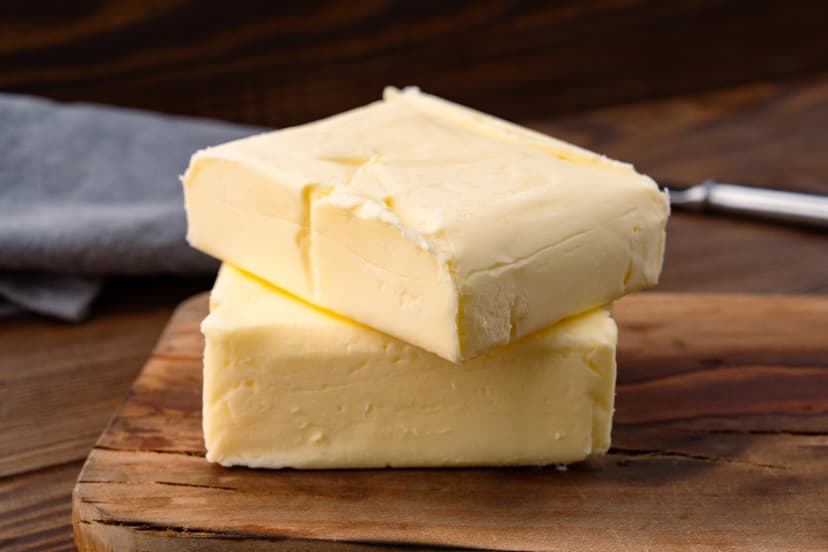
Why Margarine Is Bad for Your Health: What About Butter?
“Why do experts recommend butter instead of margarine?”
Margarine was once hailed as a healthier alternative to butter. However, recent studies have revealed the negative effects margarine can have on our bodies—trans fats, cholesterol changes, and a variety of additives. In this post, we’ll explore the scientific research behind why margarine is harmful to health and what better alternatives you can choose.
What Is Margarine?
Margarine is a processed food made by adding hydrogen to refined vegetable oils. Specifically, it’s a blend of partially hydrogenated oils mixed with emulsifiers, flavorings, yellow coloring, seasonings, preservatives, and brine or fermented milk to create a stable emulsion.
Margarine vs. Butter: The Fundamental Difference
Margarine was originally developed as a cheaper alternative to butter. But the difference between them is more than just cost.
Butter is a natural fat made by churning the fat from milk into a solid form. Margarine, on the other hand, is a chemically processed product made from vegetable oils. This fundamental difference greatly impacts how each affects our health.
Trans Fats: Margarine’s Biggest Problem
What Are Trans Fats?
Trans fats (Trans Fatty Acids, TFA) are fats created when hydrogen is added to liquid vegetable oils to make them solid—a process called “hydrogenation.” This is what allows margarine to remain solid at room temperature.
There are two types of trans fats:
- Industrial Trans Fats (iTFA): Artificially created fats found in processed foods like margarine
- Ruminant Trans Fats (rTFA): Naturally occurring fats found in animals like cows and sheep
Health Risks of Trans Fats
According to research, consuming industrial trans fats (iTFA) is linked to serious health problems:
- Cardiovascular Disease: Fat builds up on artery walls, leading to atherosclerosis
- Increased Inflammation: Chronic inflammation is a root cause of many diseases
- Type 2 Diabetes: Raises insulin resistance, increasing the risk of diabetes
The amount of trans fats in 100g of margarine can range from 0.4g to 4.1g, depending on the product. The World Health Organization (WHO) recommends limiting daily trans fat intake to less than 1% of total calories—about 2g per day for a 2,000-calorie diet.
Scientific Studies Reveal the Risks of Margarine
A recent study compared the effects of margarine and butter on the human body. Participants were divided into three groups and consumed different fats over four weeks:
- Margarine with no trans fats: 0.4g TFA per 100g
- Margarine with industrial trans fats: 4.1g TFA per 100g
- Butter: Contains natural ruminant trans fats
Blood Concentration of Different Trans Fats
The study found that levels of elaidic acid (C18:1 t9) in margarine and trans vaccenic acid (C18:1 t11) in butter varied significantly in participants’ blood depending on which fat they consumed. This means the type of trans fat you eat is directly reflected in your blood. Regular margarine consumption leads to the accumulation of industrial trans fats in the body.
Differences in Blood Metabolites
Even more interestingly, the group that consumed margarine had a completely different metabolic profile from the butter group. Researchers used metabolomics analysis of blood samples and could clearly distinguish between the groups.
This is strong evidence that margarine and butter are processed very differently by the body.
Effects on Cholesterol Levels
Many people think margarine is better than butter for cholesterol, but the research tells a different story.
Total Cholesterol Changes
After four weeks, total cholesterol changes were as follows:
- Butter group (rTFA): Increased by 0.44 mmol/L (statistically significant)
- Industrial TFA margarine group (iTFA): Increased by 0.17 mmol/L
- Trans-fat-free margarine group (wTFA): Increased by 0.02 mmol/L
Surprisingly, butter caused the greatest increase in total cholesterol. However, when looking at the types of cholesterol, the picture becomes more nuanced.
LDL (Bad) Cholesterol Changes
LDL cholesterol, which contributes to atherosclerosis:
- Butter group: Increased by 0.37 mmol/L (statistically significant)
- Industrial TFA margarine group: Increased by 0.01 mmol/L
- Trans-fat-free margarine group: Decreased by 0.03 mmol/L
While butter increased LDL the most, industrial margarine also didn’t have a positive effect.
HDL (Good) Cholesterol and Triglycerides
No statistically significant differences were observed between the three groups for HDL or triglyceride levels. This suggests that these markers are not greatly affected by the type of margarine consumed.
Implications of the Cholesterol Study
Since the study involved relatively low doses of trans fats over a short period (4 weeks), the clinical differences were minor. However, long-term consumption may lead to cumulative effects.
Especially concerning is that industrial trans fats are known to cause inflammation and metabolic disorders—risks not visible just by looking at cholesterol levels.
Margarine’s Manufacturing Process and Additives
Another health concern is the wide range of additives used during margarine production.
Additives Commonly Found in Margarine
- Emulsifiers: Help keep oil and water mixed
- Flavorings: To mimic butter’s flavor
- Yellow Coloring: Gives it a buttery color
- Seasonings: Added to improve taste
- Preservatives: Extend shelf life
- Brine or Fermented Milk: For added flavor
Some of these additives can negatively affect health when consumed excessively. Certain emulsifiers and preservatives may also disrupt the gut microbiome.
Problems with Hydrogenation
Hydrogen is added to turn liquid oils into solids. If the process is incomplete, partially hydrogenated oils are produced—this is where trans fats are formed in large quantities.
To reduce trans fats, manufacturers now use fully hydrogenated oils or blend in solid fats like palm oil. However, these are still highly processed and less desirable than natural fats like butter.
Healthy Fat Alternatives to Margarine
So what should you use instead of margarine? Fortunately, there are many healthier options.
1. Olive Oil
Rich in monounsaturated fats, olive oil supports cardiovascular health. Extra virgin olive oil also contains plenty of antioxidants.
Usage Tip: Great for salad dressings or low-heat cooking. Not suitable for high-heat cooking.
2. Avocado Oil
High smoke point and rich in monounsaturated fats like olive oil.
Usage Tip: Suitable for frying, roasting, and baking.
3. Coconut Oil
Though high in saturated fat, it’s rich in medium-chain triglycerides (MCTs), which are quickly converted to energy.
Usage Tip: Ideal for baking or medium-heat cooking. Its coconut aroma may influence certain dishes.
4. Butter (in moderation)
Butter is a natural dairy fat and a better option than margarine when consumed in moderation. Grass-fed butter is especially rich in omega-3s and vitamin K2.
Usage Tip: Use in baking, sauces, or to enhance flavor at the end of cooking.
5. Perilla Oil and Sesame Oil
Common in Korean cooking, perilla oil is rich in omega-3s and sesame oil contains sesamol, a powerful antioxidant.
Usage Tip: Use perilla oil in vegetable side dishes and sesame oil for finishing stir-fries or braised dishes. Avoid high heat.
Frequently Asked Questions (FAQ)
Q1: Is margarine with zero trans fats still bad?
New margarine products without trans fats are available and are better than traditional margarine. However, they are still highly processed with various additives, making them less ideal than natural fats.
Q2: Isn’t butter high in saturated fat? Is it still healthy?
Yes, butter is high in saturated fat. But recent studies suggest that saturated fat from natural dairy may not be as harmful as once believed. The key is moderation—use only what you need in cooking.
Q3: What is the healthiest oil?
There’s no single “best” oil. Each type has its pros and cons depending on cooking method. The best approach is to consume a variety of healthy fats.
Q4: I find it hard to give up margarine completely. What should I do?
Take it step by step. Start by replacing margarine on toast with butter or avocado, and switch to oils for baking. Small changes make it easier.
Q5: How can I spot trans fats on food labels?
Check the nutrition facts for “Trans Fat” and the ingredients list for “partially hydrogenated oil”—this signals the presence of trans fats.
Smart Choices for a Healthier Table
Though margarine was once seen as a healthier alternative to butter, science shows otherwise. The dangers of industrial trans fats, impact on cholesterol, and heavy processing with additives all point to reasons why margarine should be avoided.
The good news is that you have plenty of healthier options—olive oil, avocado oil, moderate amounts of butter, and familiar oils like perilla and sesame. The key is to avoid overly processed fats and choose natural fats in moderation.
Small changes can make a big difference. Why not start today by replacing margarine on your table with something healthier? Your heart and arteries will thank you! 💚