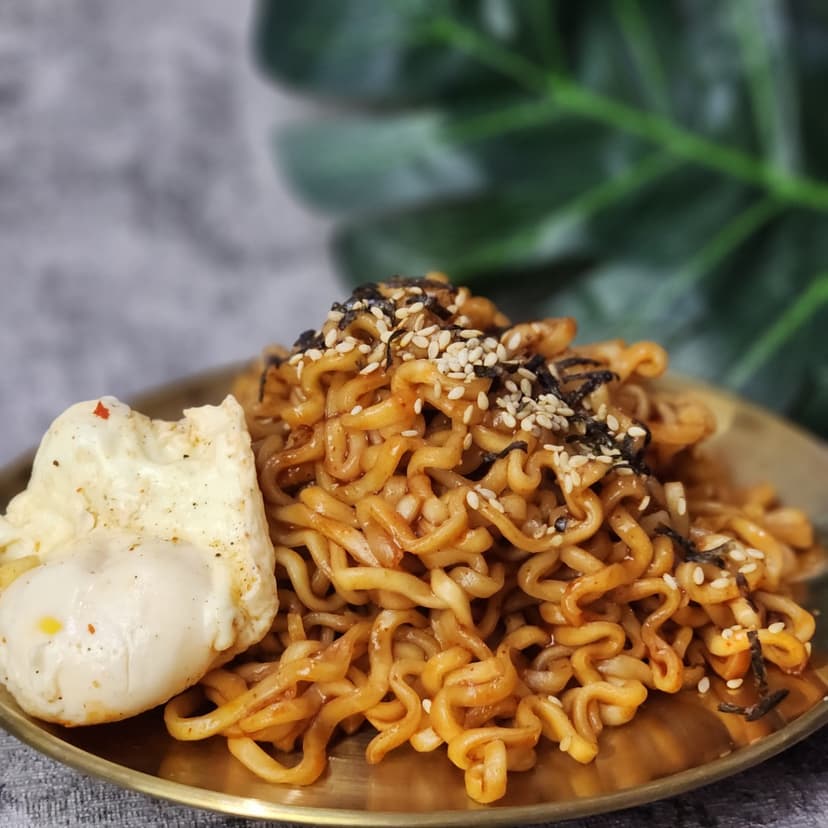
Buldak Bokkeum Myeon Scoville Scale – How Spicy Is It Really?
Have you ever wondered, “What’s the spiciest instant ramen in the world?” Many people would probably think of Buldak Bokkeum Myeon. The “Buldak Bokkeum Myeon Challenge” gained massive popularity on YouTube, and people around the world took on the fiery challenge, sweating profusely. But just how spicy is Buldak Bokkeum Myeon? Today, we’ll take a look at the Scoville Heat Units (SHU) of Buldak Bokkeum Myeon and uncover the secrets of its spiciness by comparing it to other spicy foods!
The Birth of Buldak Bokkeum Myeon: Samyang Foods’ Flagship Product
Buldak Bokkeum Myeon is a ramen released by the well-known Korean food company Samyang Foods in April 2012. After its release, it became a massive hit and established itself as one of Samyang’s flagship products. With its extremely spicy yet umami-rich flavor, it gained attention both in Korea and internationally, expanding into various series like Carbonara, Cheese, and Nuclear Buldak. Today, Buldak Bokkeum Myeon accounts for more than 80% of Samyang’s total ramen production and is so popular globally that the company operates a dedicated export-only factory.
Exploring the Scoville Heat Units of Buldak Bokkeum Myeon
The Scoville Heat Unit (SHU) is an international standard unit that quantifies the spiciness of chili peppers. It measures the concentration of capsaicin—the compound responsible for heat—in chili, meaning the higher the SHU, the spicier it is.
So, what’s the Scoville rating for Buldak Bokkeum Myeon?
- Original Buldak Bokkeum Myeon: about 4,404 SHU
- Carbonara Buldak Bokkeum Myeon: about 2,400 SHU
- Nuclear Buldak Bokkeum Myeon: about 10,000 SHU
In short, the original Buldak is spicier than Shin Ramyun, and the Nuclear version reaches a heat level comparable to Cheongyang chili peppers. What sets it apart is not just the heat but the “painful umami” that accompanies it.
For reference, a Scoville rating of 10,000 SHU equates to about 0.001% pure capsaicin concentration. When consumed directly, it strongly activates the pain receptors on your tongue.
Comparing with Other Spicy Foods
“4,404 SHU—how hot is that really?” If you’re not sure, let’s compare it with other spicy foods.
Spicy Sauces & Peppers Around the World
- Sriracha Sauce: about 1,000–2,500 SHU
- Tabasco Sauce: about 2,500–5,000 SHU
- Jalapeño Peppers: about 2,500–10,000 SHU
- Cheongyang Chili Peppers: about 4,000–12,000 SHU
- Habanero Peppers: about 100,000–350,000 SHU
- Carolina Reaper: about 1,400,000–2,200,000 SHU
Buldak Bokkeum Myeon is hotter than Sriracha and about on par with or slightly hotter than Tabasco. You could say it’s similar to eating one Cheongyang pepper. In contrast, compared to Habanero or the Carolina Reaper, Buldak’s spiciness is relatively tame.
The reason Buldak Bokkeum Myeon feels particularly spicy is because it has no soup. The sauce directly coats the noodles, stimulating your tongue’s pain receptors more intensely.
Comparing with Korean Ramen
- Shin Ramyun: about 3,400 SHU
- Yeul Ramyun: about 5,013 SHU
- Teumsae Ramyun: about 9,413 SHU
- Yeomra Daewang Ramyun: about 21,000 SHU
Buldak Bokkeum Myeon (4,404 SHU) is hotter than Shin Ramyun and comparable to Yeul Ramyun, but not as hot as Teumsae or Yeomra Daewang Ramyun. Still, it feels hotter because it uses a dry mixed sauce. Since it’s not diluted in water, the capsaicin hits more directly and intensely.
Understanding Spiciness Makes It Tastier
Today we explored the Scoville scale of Buldak Bokkeum Myeon and compared it with other foods to better understand what makes it spicy. While the numbers aren’t outrageously high, its soup-less form and concentrated sauce make it feel far more intense. Use the Scoville ratings to find your own “spice preference.” If you’re up for a challenge, you might want to give Nuclear Buldak a shot. How about a fiery bowl for dinner tonight? 🔥